With unprecedented, exclusive access to family archives, award-winning journalist and biographer Andrew Meier vividly chronicles how the Morgenthaus amassed a fortune in Manhattan real estate, advised presidents, advanced the New Deal, exposed the Armenian Genocide, rescued victims of the Holocaust, waged war in the Mediterranean and Pacific, and, from a foundation of private wealth, built a dynasty of public service.
Sponsorship Levels & Tickets for Honoring Christina Maranci, Mashtots Chair in Armenian Studies, Harvard ~ Saturday, May 6, 2023. NAASR was launched in March 1955 to pursue a bold vision of promoting Armenian Studies by establishing endowed chairs at foremost universities in the United States. NAASR achieved this ambitious goal by establishing the first chair in Armenian Studies, at Harvard University. In 1959 we marked the successful conclusion of our Harvard Chair campaign at a gala in Memorial Hall. The Mashtots Chair was the first at Harvard to be endowed by a community organization.
NAASR's ԱԲԳ for Children, presentsA Call for Rain / Գարունը եկաւ ամպերով, Ամպերը եկան անձրեւով, Storytelling, Songs, and Games in Armenian for children of all ages and their families.
We Are All Armenian is a groundbreaking collection of personal essays–by established and emerging Armenian voices–exploring the multilayered realities of life in the Armenian diaspora.
The Horrors of Adana offers one of the first close examinations of these events, analyzing sociopolitical and economic transformations that culminated in a cataclysm of violence. Drawing on primary sources in a dozen languages, he develops an interdisciplinary approach to understand the rumors and emotions, public spheres and humanitarian interventions that together informed this complex event.
Peter Balakian will discuss the book of poems Bloody News from My Friend by Siamanto (1878-1915). Dr. Diran Balakian, Peter Balakian’s grandfather, at the time of the 1909 Adana massacres was working as a physician tending to the wounded and was also an eyewitness to the atrocities.
This presentation will focus on several efforts since 2019 to continue and expand the long-running project of Armenian Genocide denial and will also discuss how it dovetails with the efforts of Azerbaijan to rewrite history as a means to dictate Armenia’s future but also its past.
Professor Ron Suny, emeritus of the University of Chicago and the University of Michigan -- and author of a major study of the massacres and deportations committed by the Ottoman Turks in 1915, "They Can Live in the Desert But Nowhere Else": A History of the Armenian Genocide (Princeton University Press, 2015) -- uses the insights of Moses' work to take a fresh look at the Armenian tragedy and how it provides another lens to look at the concept of genocide.
This audio-visual presentation, featuring rare archival material, photographs and video clips, sheds light on the massive life-saving impact of the Near East Relief and more specifically, the Kerr family, on a generation of survivors of the Armenian Genocide. Responding to horrific eyewitness accounts and urgent pleas for help, the U.S. mobilized an unprecedented campaign of humanitarian assistance led by the Near East Relief (NER) and given legs by a small army of relief workers who risked their lives to help the destitute survivors in distant, dangerous lands. Among the volunteers was Stanley Kerr, a young biochemist in the U.S. Army who, learning of the opportunity to join the relief effort, in 1919 boarded a ship to the crumbling Ottoman Empire.



 With unprecedented, exclusive access to family archives, award-winning journalist and biographer Andrew Meier vividly chronicles how the Morgenthaus amassed a fortune in Manhattan real estate, advised presidents, advanced the New Deal, exposed the Armenian Genocide, rescued victims of the Holocaust, waged war in the Mediterranean and Pacific, and, from a foundation of private wealth, built a dynasty of public service.

 Sponsorship Levels & Tickets for Honoring Christina Maranci, Mashtots Chair in Armenian Studies, Harvard ~ Saturday, May 6, 2023. NAASR was launched in March 1955 to pursue a bold vision of promoting Armenian Studies by establishing endowed chairs at foremost universities in the United States. NAASR achieved this ambitious goal by establishing the first chair in Armenian Studies, at Harvard University. In 1959 we marked the successful conclusion of our Harvard Chair campaign at a gala in Memorial Hall. The Mashtots Chair was the first at Harvard to be endowed by a community organization.

 NAASR's ԱԲԳ for Children, presents A Call for Rain / Գարունը եկաւ ամպերով, Ամպերը եկան անձրեւով, Storytelling, Songs, and Games in Armenian for children of all ages and their families.

 We Are All Armenian is a groundbreaking collection of personal essays–by established and emerging Armenian voices–exploring the multilayered realities of life in the Armenian diaspora.

 The Horrors of Adana offers one of the first close examinations of these events, analyzing sociopolitical and economic transformations that culminated in a cataclysm of violence. Drawing on primary sources in a dozen languages, he develops an interdisciplinary approach to understand the rumors and emotions, public spheres and humanitarian interventions that together informed this complex event.

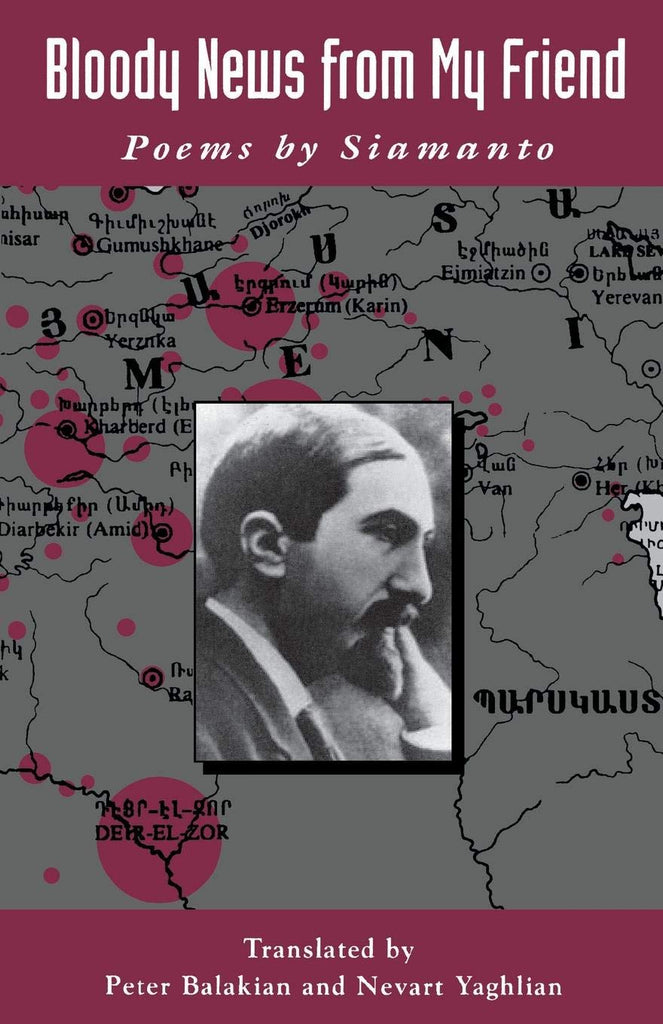 Peter Balakian will discuss the book of poems Bloody News from My Friend by Siamanto (1878-1915). Dr. Diran Balakian, Peter Balakian’s grandfather, at the time of the 1909 Adana massacres was working as a physician tending to the wounded and was also an eyewitness to the atrocities.

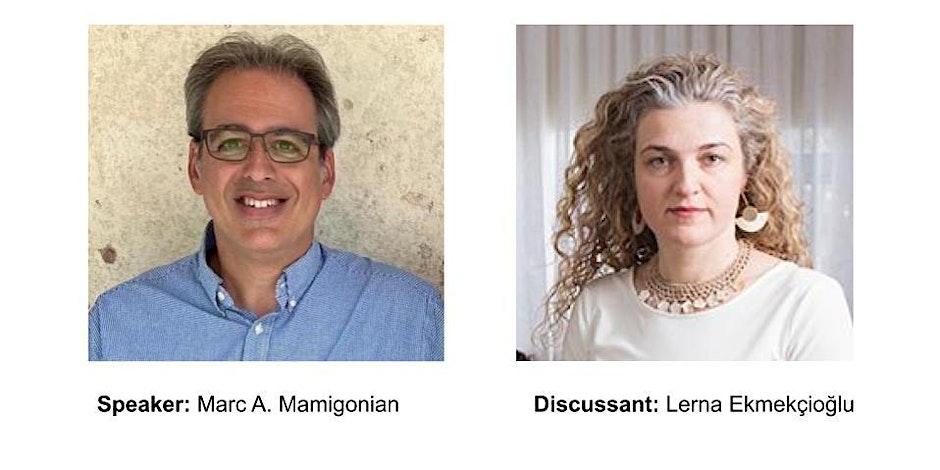 This presentation will focus on several efforts since 2019 to continue and expand the long-running project of Armenian Genocide denial and will also discuss how it dovetails with the efforts of Azerbaijan to rewrite history as a means to dictate Armenia’s future but also its past.

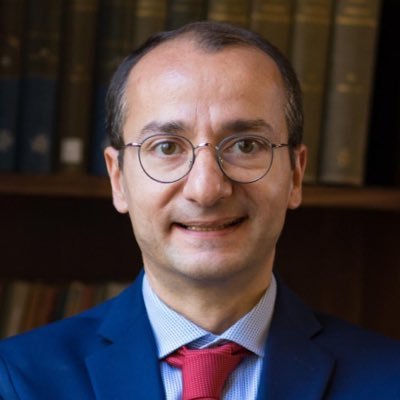 Dr. Khatchig Mouradian is the author of the award-winning book The Resistance Network:The Armenian Genocide and Humanitarianism in Ottoman Syria, 1915-1918 (Michigan State University Press, 2021).

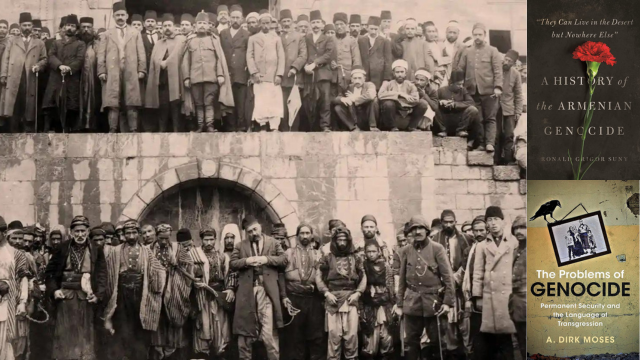 Professor Ron Suny, emeritus of the University of Chicago and the University of Michigan -- and author of a major study of the massacres and deportations committed by the Ottoman Turks in 1915, "They Can Live in the Desert But Nowhere Else": A History of the Armenian Genocide (Princeton University Press, 2015) -- uses the insights of Moses' work to take a fresh look at the Armenian tragedy and how it provides another lens to look at the concept of genocide.

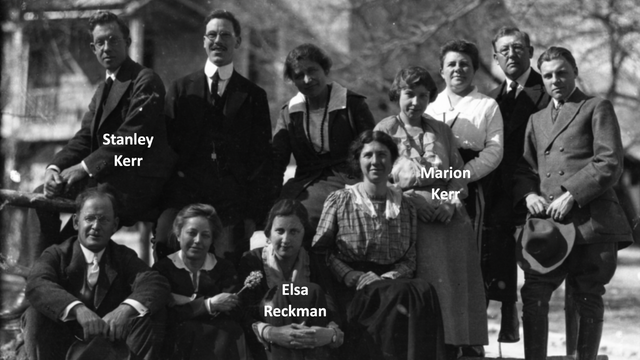 This audio-visual presentation, featuring rare archival material, photographs and video clips, sheds light on the massive life-saving impact of the Near East Relief and more specifically, the Kerr family, on a generation of survivors of the Armenian Genocide. Responding to horrific eyewitness accounts and urgent pleas for help, the U.S. mobilized an unprecedented campaign of humanitarian assistance led by the Near East Relief (NER) and given legs by a small army of relief workers who risked their lives to help the destitute survivors in distant, dangerous lands. Among the volunteers was Stanley Kerr, a young biochemist in the U.S. Army who, learning of the opportunity to join the relief effort, in 1919 boarded a ship to the crumbling Ottoman Empire.