In light of the ethnic cleansing of the Armenian population of the Artsakh, the USC Dornsife Institute of Armenian Studies is hosting a daylong symposium featuring prominent figures from academia, the arts, and civil society, who will share their firsthand experiences of conflict, life under blockade, and dispossession.
This talk explores the role of Reverend Hovhannes Eskijian and his associates in the underground network of humanitarians, missionaries, and diplomats who resisted the destruction of the Armenian people during World War I.
Join us as we examine the emergence of various groups as “questions” within the overarching Eastern Question and trace their subsequent solutions through various means of coerced homogenization in the global context of late nineteenth and early twentieth-century racial thinking.
This hybrid lecture will discuss the pivotal Ottoman era of Tanzimat not just through use of the Ottoman Archives, but also a far less known but just as important source, that of the Armenian Patriarchate.
This Colloquium is an annual international conference for graduate students in the Humanities/Social Sciences to present research pertaining to all aspects of Armenian studies, including but not limited to language, literature, history, gender studies, sociology, anthropology, economics, and art history.
Dr. Owen Miller, the author of a thesis and several research articles on the Sasun massacre of 1894 and its background, will discuss with Dr. Jelle Verheij his findings and the need for revision of the traditional perspectives, touching on many of the key issues and players: the death toll, characteristics and motivation of the perpetrators, the roles of the Ottoman authorities, foreign powers and Armenian revolutionary parties.
In 2021, Büke Uras published his most comprehensive publication to date, “Balyans, Ottoman Architecture and Balyan Archive.” The Mayor of Istanbul financed the 3rd and 4th editions of the book and decided it to be the official diplomatic gift of Istanbul Municipality, a first in Republic’s history for an item of Armenian subject.
The Horrors of Adana offers one of the first close examinations of these events, analyzing sociopolitical and economic transformations that culminated in a cataclysm of violence. Drawing on primary sources in a dozen languages, he develops an interdisciplinary approach to understand the rumors and emotions, public spheres and humanitarian interventions that together informed this complex event.
This audio-visual presentation, featuring rare archival material, photographs and video clips, sheds light on the massive life-saving impact of the Near East Relief and more specifically, the Kerr family, on a generation of survivors of the Armenian Genocide. Responding to horrific eyewitness accounts and urgent pleas for help, the U.S. mobilized an unprecedented campaign of humanitarian assistance led by the Near East Relief (NER) and given legs by a small army of relief workers who risked their lives to help the destitute survivors in distant, dangerous lands. Among the volunteers was Stanley Kerr, a young biochemist in the U.S. Army who, learning of the opportunity to join the relief effort, in 1919 boarded a ship to the crumbling Ottoman Empire.
Join us on Saturday, April 1, 2023, for a conversation between Dr. Abraham Terian and Dr. S. Peter Cowe "For a Better Understanding of St. Gregory of Narek's Prayers," an in-person and live-streamed event.



 In light of the ethnic cleansing of the Armenian population of the Artsakh, the USC Dornsife Institute of Armenian Studies is hosting a daylong symposium featuring prominent figures from academia, the arts, and civil society, who will share their firsthand experiences of conflict, life under blockade, and dispossession.

 This talk explores the role of Reverend Hovhannes Eskijian and his associates in the underground network of humanitarians, missionaries, and diplomats who resisted the destruction of the Armenian people during World War I.

 Join us as we examine the emergence of various groups as “questions” within the overarching Eastern Question and trace their subsequent solutions through various means of coerced homogenization in the global context of late nineteenth and early twentieth-century racial thinking.

 This hybrid lecture will discuss the pivotal Ottoman era of Tanzimat not just through use of the Ottoman Archives, but also a far less known but just as important source, that of the Armenian Patriarchate.

 This Colloquium is an annual international conference for graduate students in the Humanities/Social Sciences to present research pertaining to all aspects of Armenian studies, including but not limited to language, literature, history, gender studies, sociology, anthropology, economics, and art history.

 Dr. Owen Miller, the author of a thesis and several research articles on the Sasun massacre of 1894 and its background, will discuss with Dr. Jelle Verheij his findings and the need for revision of the traditional perspectives, touching on many of the key issues and players: the death toll, characteristics and motivation of the perpetrators, the roles of the Ottoman authorities, foreign powers and Armenian revolutionary parties.

 In 2021, Büke Uras published his most comprehensive publication to date, “Balyans, Ottoman Architecture and Balyan Archive.” The Mayor of Istanbul financed the 3rd and 4th editions of the book and decided it to be the official diplomatic gift of Istanbul Municipality, a first in Republic’s history for an item of Armenian subject.

 The Horrors of Adana offers one of the first close examinations of these events, analyzing sociopolitical and economic transformations that culminated in a cataclysm of violence. Drawing on primary sources in a dozen languages, he develops an interdisciplinary approach to understand the rumors and emotions, public spheres and humanitarian interventions that together informed this complex event.

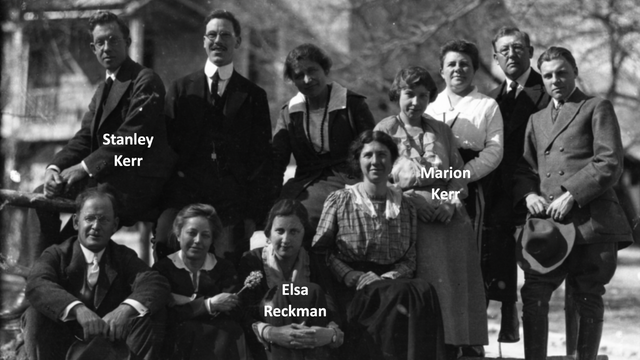 This audio-visual presentation, featuring rare archival material, photographs and video clips, sheds light on the massive life-saving impact of the Near East Relief and more specifically, the Kerr family, on a generation of survivors of the Armenian Genocide. Responding to horrific eyewitness accounts and urgent pleas for help, the U.S. mobilized an unprecedented campaign of humanitarian assistance led by the Near East Relief (NER) and given legs by a small army of relief workers who risked their lives to help the destitute survivors in distant, dangerous lands. Among the volunteers was Stanley Kerr, a young biochemist in the U.S. Army who, learning of the opportunity to join the relief effort, in 1919 boarded a ship to the crumbling Ottoman Empire.

 Join us on Saturday, April 1, 2023, for a conversation between Dr. Abraham Terian and Dr. S. Peter Cowe "For a Better Understanding of St. Gregory of Narek's Prayers," an in-person and live-streamed event.