

News — #NAASRMardigianLibrary
Treasures of NAASR's Mardigian Library ~ Literature in Translation (1920-1946): Part III

 Part III, the final part of Literature in Translation, takes us from 1920 up to 1946. The post-World War II era saw further developments in terms of translations which lie beyond the scope of this feature (but could form the basis for future ones). Click here to read the full feature.
Literature in Translation (1910-1915): Part II

 In the first part of this feature we looked at works translated into Armenian and published between 1845 and 1909. Part II continues with volumes published from 1910 until 1915.
Literature in Translation (1845-1950): Part I

 NAASR’s Mardigian Library contains innumerable works of literature translated into Armenian from many languages. The works translated span from ancient to contemporary writings, and the focus of this feature will be on the 19th and first half of the 20th century when tremendous efforts were made to make non-Armenian (mainly western) literary works accessible to the growing Armenian readership in Eastern Armenia, Western Armenia, and throughout the diaspora.
Part II ~ Vintage Armenian Textbooks, Grammars, and Readers

 In this, the second part of our Treasures of NAASR's Mardigian Library feature on vintage Armenian textbooks, grammars, and readers, we present 9 publications spanning from the early 1920s through 1950, published in Lebanon, Turkey, France, the U.S., and Argentina.
Remembering T‘lgadints‘i, the Chronicler of Kharpert Life

 The figure at the center of this installment of Treasures of NAASR’s Mardigian Library is the noted—while also being under-known—Western Armenian author and educator Hovhannēs Harut‘iwnean (Յովհաննէս Յարութիւնեան, ca. 1860-1915), better known by his chosen pen-name of T‘lgadints‘i (Թլկատինցի). We feature here some publications of his work as well as those focusing on his work, including a special issue of Nor Kir [Nor Gir], the literary journal published by Peniamin Noorigian, which, thanks to Aram Andonian, included some previously unpublished works by T‘lgadints‘i, as well as two photographs from our collections.
May 28: Vratsian’s Hayastani Hanrapetutʻiwn and Hovannisian’s The Republic of Armenia

 May 28 marks the establishment of the Republic of Armenia in 1918, providing us with the opportunity to look back on two monuments to the short-lived but historically important republic: Hayastani Hanrapetutʻiwn (Հայաստանի Հանրապետութիւն = The Republic of Armenia), by Simon Vrats‘ean (Սիմոն Վրացեան, also Vratsian or Vratzian; we will use the spelling Vratsian in this piece), published in 1928 in Paris, and the second revised edition published in 1958 in Beirut; and Richard G. Hovannisian’s 4-volume The Republic of Armenia (1971, 1982, 1996). We will also touch upon the very direct connection between these two landmark publications and their respective authors.
Book Stamps and What They Tell Us

 NAASR's Mardigian Library has over 30,000 books published over the past three and a half centuries. This includes titles published almost everywhere Armenians have lived in any significant numbers, including major centers of Armenian life (and publishing) such as Yerevan, Etchmiadzin, Tiflis, St. Petersburg, Jerusalem, Constantinople, Smyrna, New Julfa, Beirut, Cairo, Sofia, Venice, Paris, Marseilles, New York, Boston, Fresno, Los Angeles, Buenos Aires and many others. In a way, these books contain the story of the Armenian diaspora itself.
Two Classic Works on Artsakh

 While taking note of the anniversary of the capture of Shushi this week in 1992, one of the key events in the Nagorno-Karabakh war, we look back at two noteworthy books from NAASR’s Mardigian Library from the late 19th century that explore the then recent past of Artsakh/Nagorno-Karabagh: Khamsayi Melikʻutʻiwnnerě (Խամսայի Մելիքութիւններ) by Raffi and Gaghtnik‘ Gharabaghi (Գաղտնիք Ղարաբաղի) by Apresi Beknazareants‘.
“Come On-a My House” and the Armenian-American Pop Music Invasion That Never Was

 Not everything in NAASR’s Mardigian Library is a book. There are also, among other things, a huge number of recordings—78s, LPs, tapes, CDs, etc., all with some Armenian connection or another. Some of these will be topics of future installments; most of them are obscure, except to specialists and collectors. For this installment we will go in a totally different direction and focus on a record that was a huge hit in its day, and its Armenian connections.
Hushamatean Mets Egherni, 1965, and the Rebirth of Armenian Genocide Scholarship

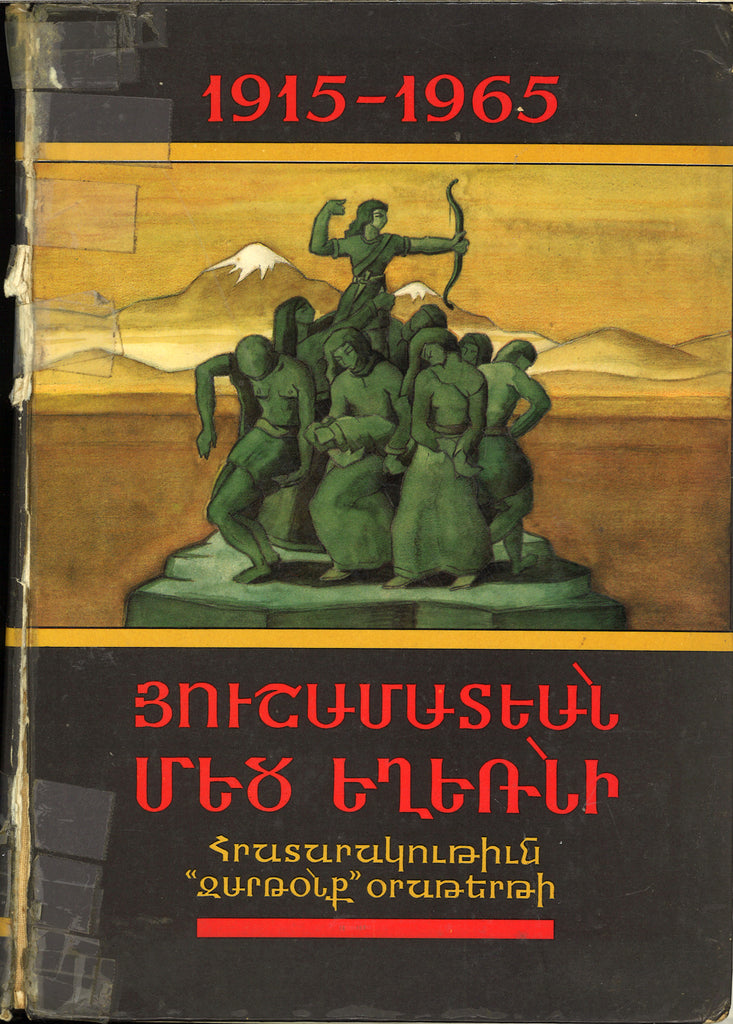
Fifty-five years ago, April 1965, can truly be seen as, in the words of author (and NAASR Board member) Michael Bobelian, “the birth of the modern campaign of justice” for the Armenian Genocide. 1965 may also be seen as the year of the re-birth of efforts to document the Armenian Genocide, which would lead to the creation, in more recent years, of a growing body of scholarship on the Genocide.